Pregnancy Tracker & Baby Diary
- 0.0
- Rating
- 100.00K
- Installs
- Free
- Price

 Analysis by App-foxy
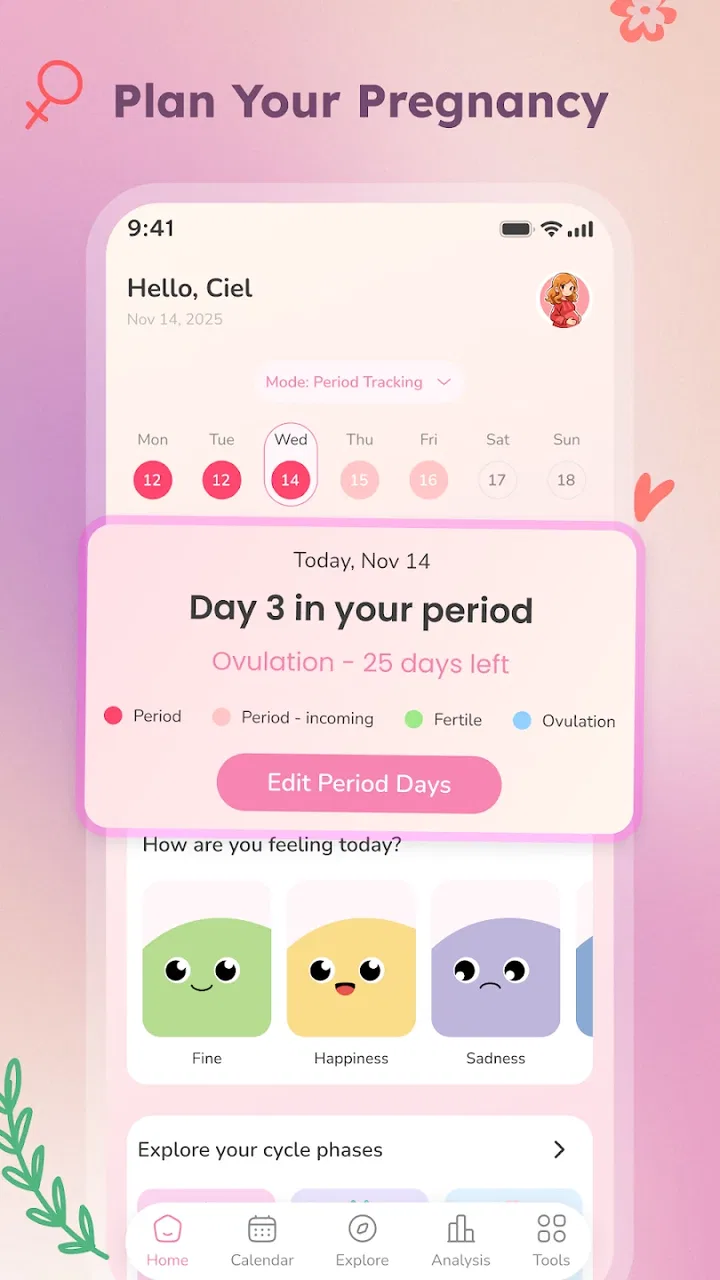
Pregnancy apps can become either genuinely useful companions or another source of clutter on a phone. I look for something that helps me stay organized without making every day feel like a research project. Pregnancy Tracker & Baby Diary, developed by Willson Studio, takes a straightforward parenting-app approach: it is built around following a pregnancy and keeping personal notes in one place. After using it, I see its main appeal in its simplicity rather than in a long list of specialist tools.
The app is free and aimed at everyone, which makes it easy to try without turning the decision into a financial commitment. It has passed 100K installs, although its average rating is currently 0.0, so I would treat the download count as evidence of interest rather than proof that it will suit every expecting parent. It was released on Jan 12, 2026, and version 1.0.2 is the version to look for. It requires Android 9 or later.
What I would look for before choosing a pregnancy tracker
My first decision criterion is whether an app helps with a real routine. Pregnancy information is easy to find elsewhere, but useful organization is harder. I want to be able to open an app and quickly understand where I am in the pregnancy, record something worth remembering, and return later without searching through messages, notebooks, or scattered phone notes.
You May Also Like

 Blood Strike: 2.5 Anniversary
Blood Strike’s Loadouts Turn Every Drop Into a Tactical Gamble
A close look at Blood Strike’s custom loadouts: how fast access to signature weapons reshapes its battle royale rhythm, rewards preparation, and narrows the gap between fights.

 Pandora - Music & Podcasts
Pandora’s Music Is Easy to Start, but Harder to Recover
Pandora’s strength is its low-effort path from a seed to a station. Its weak spot is how much confidence it asks you to place in connection, setup, and quiet recovery.

 8 Ball Pool
 Is Built on Rivalries, Rematches, and Routine
A close look at the rivalries, rematches, shared routines, and unanswered safety questions that turn a quick pool match into a persistent mobile community.

 Samsung Music
’s Quiet Strength Is Playing What You Already Own
Its reach comes less from spectacle than from dependable access to a personal library. That simplicity is both the app’s strongest retention engine and its ceiling.

 AccuWeather: Weather Radar
AccuWeather Review: A Quick, Clear Forecast for Everyday Decisions
For everyday plans, the best forecast is the one you can understand quickly. AccuWeather makes rain timing, radar, and local conditions easy to act on, with a few trade-offs.

 Hill Climb Racing
Why Hill Climb Racing Still Turns Crashes Into One More Run
A tiny car, a bumpy hill and one more upgrade: Hill Climb Racing keeps resurfacing because its simple chaos makes every near-miss feel personal.
More From Our News Desk



The second criterion is tone. A pregnancy tracker should inform without pretending to replace a midwife, doctor, or other qualified professional. I prefer an app that supports personal organization and everyday awareness rather than one that encourages me to interpret every symptom alone. That distinction matters because a diary can be helpful while still being unsuitable for medical decisions.
The third criterion is how much effort the app demands. Expecting parents may be tired, busy, uncomfortable, or caring for other children. A tracker that requires constant data entry can become a chore. I therefore judge Pregnancy Tracker & Baby Diary by whether its central idea feels manageable: open it, check the relevant pregnancy information, and add a note when something matters.
There is also a practical question about switching from familiar alternatives. Many people already use a calendar, a notes app, a paper journal, or a general pregnancy website. A dedicated app only earns a place on the phone if it reduces friction. If I still need several other tools for the tasks I care about, the convenience advantage becomes smaller.
A useful role for the diary side
The diary element is more valuable than it may first appear. A pregnancy contains many small moments that are difficult to reconstruct later: when a new sensation began, what questions came to mind, how an appointment felt, or which preparation task was completed. A dedicated space gives those memories a home instead of leaving them mixed with shopping lists and unrelated notes.
One practical workflow is to use the diary as a question queue. When I think of something during the week, I can write a short reminder rather than relying on memory at an appointment. I would keep the wording neutral and factual, such as when a symptom appeared or what changed, then discuss it with a healthcare professional. The diary works best as a conversation aid, not as a diagnostic tool.
A second useful habit is creating a weekly reflection rather than recording every detail. I might note one physical change, one question, one appointment-related reminder, and one moment I want to remember. This keeps the journal sustainable and avoids the common mistake of starting with ambitious daily entries that quickly become exhausting.
The diary can also help a partner or family member understand what has been happening, provided the person using it chooses what to share. That makes it different from a purely informational tracker. It can become a private record, a practical memory aid, or a starting point for conversations at home. I would not treat it as a replacement for a shared planning system, but it can complement one.
Where Pregnancy Tracker & Baby Diary wins
The strongest case for this app is that it brings two related needs together. Pregnancy tracking gives a sense of progress, while the baby diary gives the experience a personal layer. I like that combination because it recognizes that pregnancy is not only a sequence of dates or stages. It is also a period of decisions, questions, emotions, and memories.
For someone who wants a focused parenting app rather than a broad health platform, that narrower purpose can be an advantage. A general wellness app may bury pregnancy-related notes among exercise, sleep, nutrition, and unrelated goals. A paper journal may be personal but offer no structured way to check a pregnancy overview. This app sits between those options: more focused than a blank notebook and more personal than a purely educational reference.
Its free price also lowers the cost of experimentation. I can install it, try the tracking and diary workflow, and decide whether it fits without first committing money. That matters for a category where people often test several apps before finding a comfortable routine. The Everyone content rating makes it approachable for a household where a partner or older family member may also look at the app.
Another advantage is its potential as a low-pressure starting point. Someone who has never used a pregnancy tracker may not want a complicated dashboard or a demanding schedule. Beginning with a simple record can be less intimidating. I would recommend setting up a small routine immediately: check the pregnancy view at a convenient time, then write only what is genuinely useful. The goal is consistency, not volume.
The current version, 1.0.2, also suggests that I should keep expectations realistic. This is an early version of a relatively new app, so I would judge it by the usefulness of its core experience rather than assuming it already covers every specialized need. That is not a criticism of the concept; it is a reminder to choose it for its central purpose instead of expecting a complete replacement for medical care, appointment management, or a full family organizer.
Everyday use: a realistic week
Imagine that I have an appointment coming up and remember several questions while making breakfast, commuting, or trying to sleep. Instead of sending myself multiple messages, I can place the reminders in the baby diary. Later, I can review them together and decide which ones need to be raised with my healthcare professional. After the appointment, I can record the advice in my own words and keep it alongside the rest of the pregnancy record.
That workflow has a subtle benefit: it separates remembering from reacting. I do not need to solve every concern the moment it occurs, and I do not have to trust that I will remember it days later. At the same time, I would not delay urgent medical advice simply because I wrote something in the app. The diary is useful for organization; it should never become a reason to wait.
For a partner, the same routine could support practical preparation. A note might remind us to discuss a purchase, prepare for an appointment, or revisit a question together. I would keep sensitive entries private unless I deliberately wanted to share them. That balance is important because a diary can be supportive without turning into a public family log.
Where another category may fit better
Pregnancy Tracker & Baby Diary is not automatically the best choice for someone who wants an all-in-one health system. If my priority is connecting pregnancy with broader personal wellness habits, I might prefer a general health app or a more comprehensive pregnancy platform. Those categories can be a better fit when I want one place for several kinds of tracking, even if the experience feels less focused.
If my main goal is medical education, a dedicated reference source may suit me better. A diary-centered tracker can help me organize questions, but it should not be my only source for interpreting symptoms, understanding complications, or making treatment decisions. In that situation, I would use a trusted healthcare source or speak directly with a qualified professional, while keeping this app for personal notes if I liked its organization.
A paper journal may also be the better alternative for someone who values handwriting, sketches, printed photographs, or a keepsake that does not depend on a phone. The app is more convenient for quick entries and ongoing access, but a physical notebook can feel more intimate. I would choose the app when portability and structured tracking matter more than the tactile experience.
People who already have a reliable calendar and notes workflow may not gain enough from changing. If I can already record appointments, questions, and memories in a way I actually maintain, adding another app could create duplication. The dedicated pregnancy context is useful only if it makes those tasks clearer or easier. Otherwise, the cost is not money; it is attention.
I would also skip it if I expect highly specialized planning features, detailed clinical monitoring, or a complete preparation checklist and cannot work without them. The verified identity of this product is a parenting app centered on pregnancy tracking and a baby diary. I would not download it expecting it to function as a hospital record, an emergency service, or a substitute for professional guidance.
The real cost of switching
Because the app is free, the financial risk of trying it is low. The more important cost is setup and habit formation. Moving from a paper notebook or a general notes app means deciding what belongs in the new diary and whether older entries are worth transferring. I would not copy everything. I would bring across only active questions, important appointment notes, and memories I expect to revisit.
There is also a mental cost to maintaining two systems. During the first week, I would choose one home for new pregnancy notes and use the other only as an archive. If I continue writing in both, the dedicated app cannot become a dependable record. A simple rule helps: quick pregnancy thoughts go into the diary, while appointments remain in the calendar if that is where I already manage time.
For someone changing from another pregnancy tracker, I would compare routines rather than chasing a longer feature list. Ask whether the new app makes entries faster, keeps memories easier to find, or feels more comfortable to open. If the answer is no, switching may create work without improving the experience. If the diary format encourages me to record questions that I previously forgot, the change can be worthwhile even without advanced extras.
Privacy should shape the workflow too. I would avoid placing highly sensitive information in any app unless I had reviewed its settings and felt comfortable with the arrangement. For everyday use, I can keep entries concise and avoid treating the diary as a complete medical file. That approach preserves the organizational benefit while limiting the consequences of losing access or sharing the phone.
Who should try it first
I think this app is most suitable for an expecting parent who wants a simple, dedicated place to follow pregnancy progress and record personal notes. It is especially appealing if I am currently using scattered reminders, if I want to remember questions for appointments, or if I like the idea of combining practical tracking with a personal record.
It may also work well for someone beginning pregnancy planning for the first time and unsure which kind of app to choose. Since it is free, I can test the central workflow before investing time in a more elaborate system. My advice would be to use it for a short, deliberate trial: open the tracker at a regular moment, add a few meaningful diary entries, and see whether the app reduces mental clutter.
I would be more cautious if I have complex medical needs or want detailed clinical monitoring. In that case, the app can still have a supporting role, but my healthcare team and appropriate medical resources should remain central. Likewise, if I want a shared household planner, a broader family-organizing tool may serve me better than a personal pregnancy diary.
My recommendation after weighing the trade-offs
My recommendation is to try Pregnancy Tracker & Baby Diary if your priority is a focused, free pregnancy companion with a personal diary angle. Willson Studio has positioned it in a useful middle ground: it is more purposeful than a blank notes page, while the diary concept keeps it from feeling like a sterile progress counter. I would approach it as an organizer and memory tool, not as an authority on health.
The lack of an established average rating makes me less comfortable giving it an unqualified endorsement, and its early version means I would keep expectations measured. Still, those points do not cancel its practical appeal. The decision comes down to whether its central workflow matches your habits. If you want quick pregnancy notes and a dedicated place for memories, it is worth testing. If you need a full medical, wellness, or family-management platform, another category will probably fit better.
For me, the best way to use it is intentionally: keep entries short, turn questions into appointment reminders, write a weekly reflection instead of forcing daily journaling, and avoid using the app to self-diagnose. Used that way, Pregnancy Tracker & Baby Diary can earn its place on a phone by reducing small pieces of mental load during a busy and important period.
FAQs for Pregnancy Tracker & Baby Diary
01What features does the Pregnancy Tracker & Baby Diary app offer?
The Pregnancy Tracker & Baby Diary app provides a range of features to support expectant parents. It includes a week-by-week pregnancy tracker, baby size comparisons, appointment reminders, and a diary for documenting your journey. Additionally, you can find educational content about fetal development, nutrition tips, and checklists to ensure you're prepared for each stage.
02Is the Pregnancy Tracker & Baby Diary app free to use?
The app offers a free version with essential features, making it accessible to everyone. However, there may be in-app purchases or a premium version available that provides additional features such as personalized content, ad-free experience, and enhanced tracking options. Users can choose based on their needs and preferences.
03How accurate is the pregnancy tracking in the app?
The Pregnancy Tracker & Baby Diary app uses standard medical guidelines to provide accurate tracking of your pregnancy. The information is based on average data, but it's always recommended to consult with your healthcare provider for personalized medical advice. The app is a useful tool for general guidance and educational purposes.
04Can I share my pregnancy journey with others using this app?
Yes, the app allows you to share milestones and diary entries with friends and family through social media or direct messaging. This feature makes it easy to keep loved ones updated on your journey. You can also join community forums within the app to connect with other expectant parents for support and advice.
05What security measures are in place to protect my data on the app?
The Pregnancy Tracker & Baby Diary app prioritizes user privacy and data security. It employs encryption to protect personal information and offers options to control data sharing settings. Users are encouraged to review the app's privacy policy and terms of service to understand how their data is handled and ensure they are comfortable with the app's practices.
Pros
- Intuitive interface makes tracking easy.
- Weekly updates on baby's development stages.
- Customizable reminders for appointments.
- Integration with health apps enhances usage.
- Community support for shared experiences.
Cons
- Limited features in the free version.
- Some data entries lack customization.
- Occasional ads can be intrusive.
- Requires internet for full functionality.
- No offline mode for tracking data.

Pregnancy Tracker & Baby Diary
Gallery